EPISODE 8 – Earth's Mirror
🎧 Episode 8 – Show Notes
🧊 Episode title: Ice & Albedo: The Planet’s Mirror
🐾 Belle’s Question: Why does melting ice make warming happen even faster?
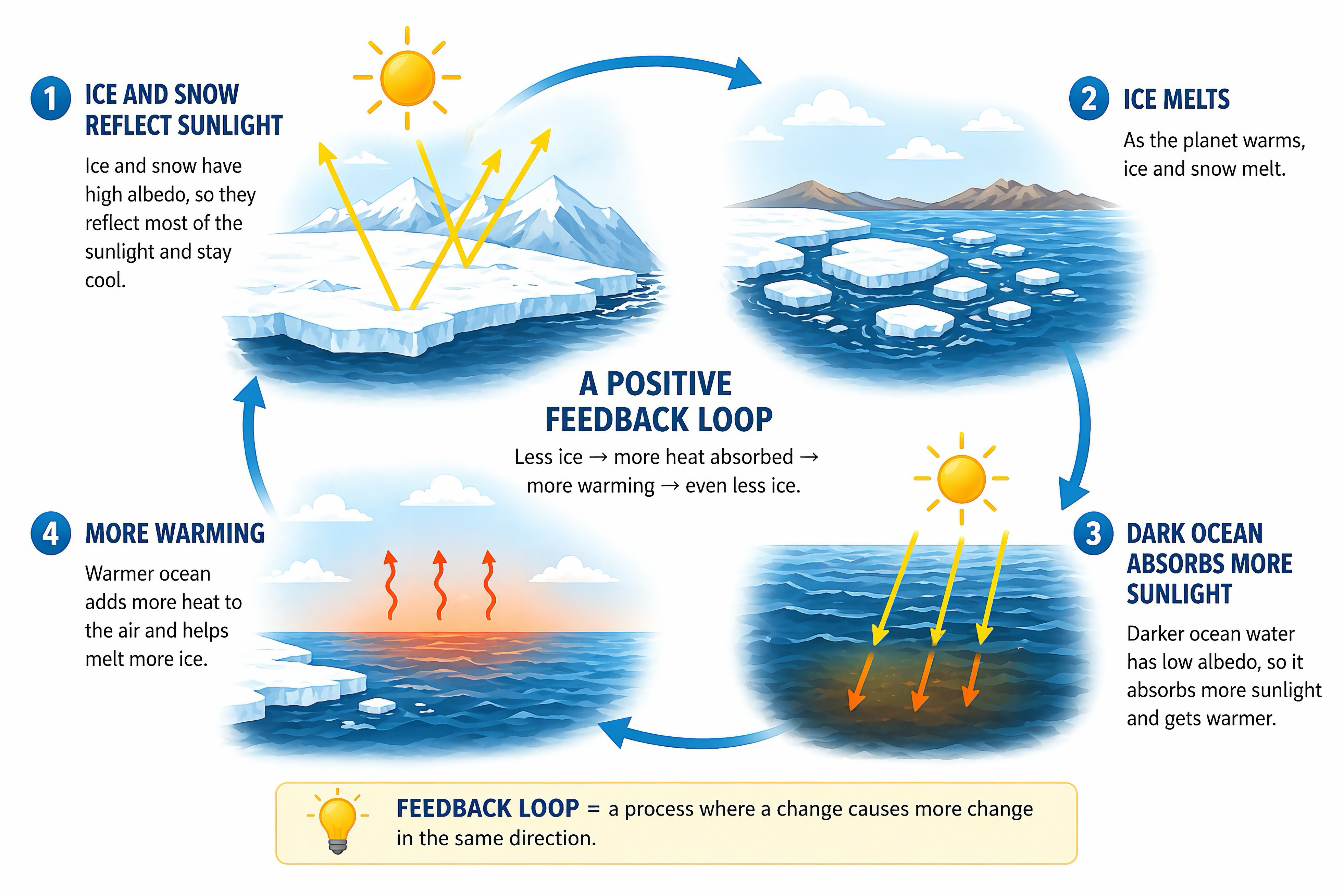
📌 If you remember one thing: Ice helps cool Earth by reflecting sunlight — so when bright ice melts and darker land or ocean is revealed, the planet absorbs more heat.
🔍 What we cover
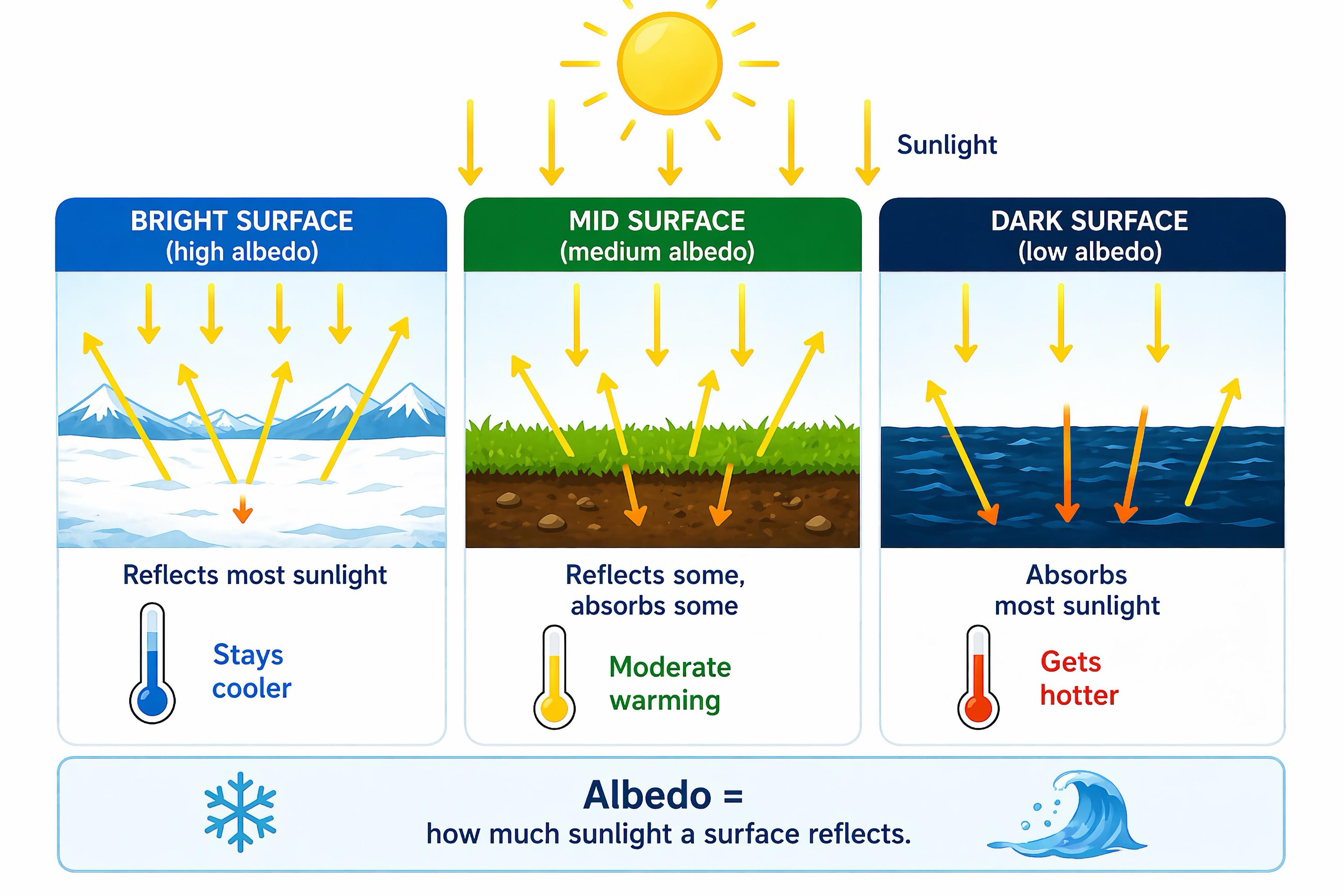
• What albedo means: how reflective a surface is. Bright surfaces reflect more sunlight; dark surfaces absorb more.
• Why ice and snow matter so much: they are bright, reflective, and cover huge areas of the planet.
• Why fresh snow reflects far more sunlight than darker surfaces such as ocean, soil, plants, or tarmac.
• How melting ice can create a feedback loop: less bright ice means more dark surface exposed, which means more heat absorbed, which can mean more melting.
• Why this matters especially in the Arctic, where the loss of snow and sea ice helps the region warm faster than the global average.
• The important difference between sea ice and land ice: sea ice mainly matters here because of reflection; land ice matters for reflection too, but when it melts it also adds water to the ocean.
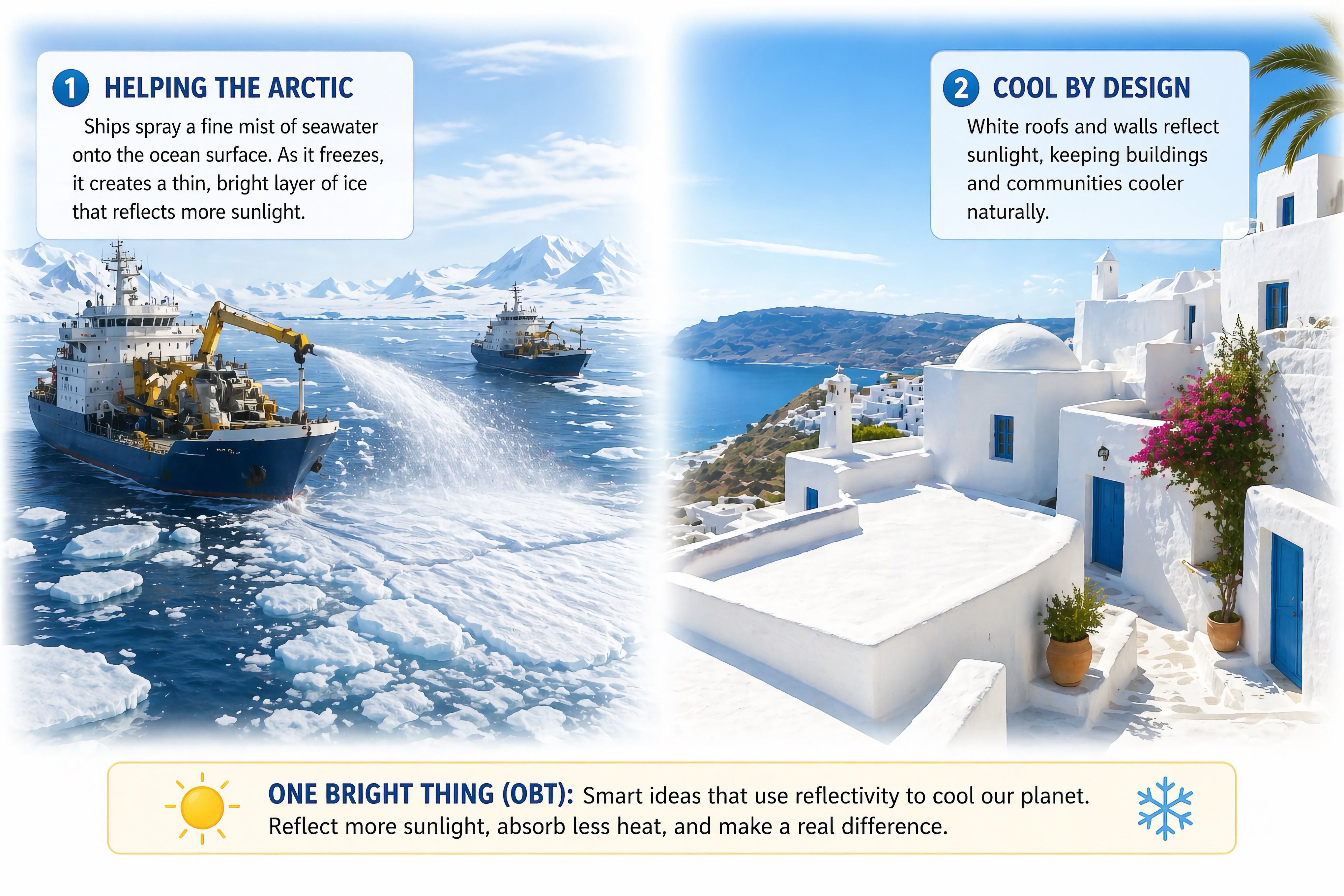
🌟 One Bright Thing: Scientists and engineers are exploring ways to protect or work with Earth’s natural cooling principles.
One idea being tested is whether thin sea ice can be made thicker in winter by pumping seawater onto the surface so it freezes into an extra layer. This is still experimental and not a substitute for cutting emissions — but it shows people trying to protect one of Earth’s natural cooling systems. And the same basic physics shows up in everyday life too: cool roofs and other lighter, more reflective building surfaces can stay much cooler than dark roofs in hot weather.
🔢 Key numbers mentioned
• Fresh snow can reflect about 80 to 90 percent of the sunlight that hits it.
• Trees, plants and soil often reflect only about 10 to 30 percent.
• Glaciers and ice sheets cover about 10 percent of Earth’s land area.
🧑🏫 Teacher Notes
This episode explains ice-albedo feedback in simple terms. The key teaching point is that climate change is not only about direct warming from greenhouse gases; it is also about feedbacks inside the Earth system that can amplify warming.
Useful keywords: albedo, reflection, absorption, feedback, sea ice, land ice, Arctic.
A simple classroom prompt is to compare light and dark surfaces in sunshine — for example clothing, cars, roofs, or playground materials — and connect that everyday experience to how ice and ocean behave differently.A second useful discussion point is the difference between sea ice and land ice. Many pupils assume all melting ice has the same effect.
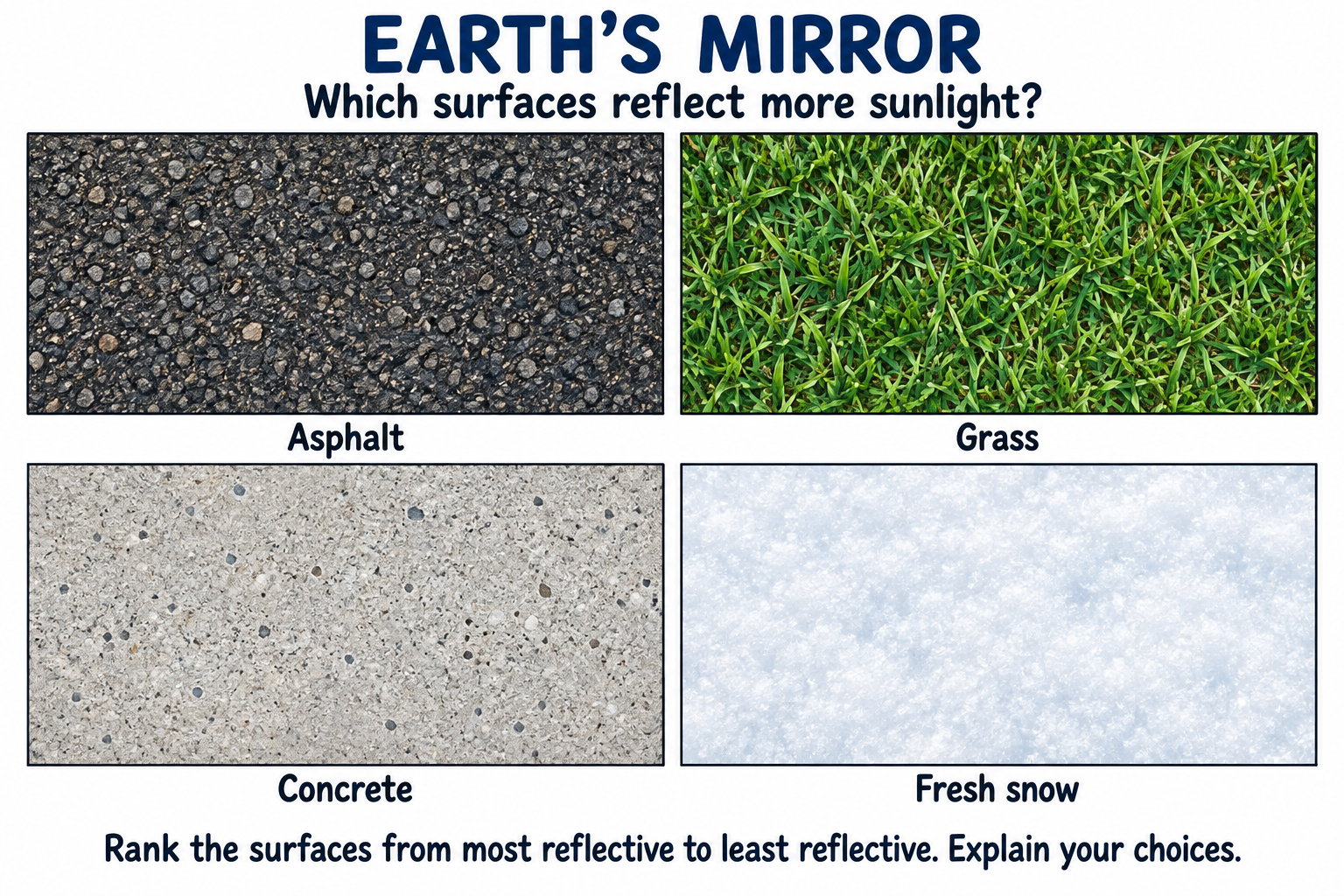
Teacher answer key: four-material reflectivity activity
Let pupils rank the four pictured surfaces and explain their predictions before revealing these figures. Albedo is the fraction of incoming sunlight reflected, on a scale from 0 to 1. Higher values mean greater reflection.
| Material | Example albedo | Rank: most reflective first |
|---|---|---|
| Fresh snow | 0.95 | 1 |
| Light concrete | 0.50 | 2 |
| Green grass | 0.25 | 3 |
| Dark asphalt | 0.04 | 4 |
Expected answer: fresh snow → light concrete → green grass → dark asphalt. Under equal incoming sunlight, the order for absorption is the reverse. Darker surfaces generally absorb more sunlight; this does not by itself determine their temperature.
How to use the data: these are NASA’s illustrative classroom values, not measurements of the pictures or fixed values for every sample. Wetness, ageing, material colour, snow condition and sun angle affect real surfaces. The 0.95 example represents very clean, fresh snow; the episode’s approximate 80–90% description covers less reflective snow conditions. A photograph’s brightness is a clue for making a prediction, not a way to measure albedo precisely.
Feedback answer: when bright snow melts and darker ground is exposed, more sunlight is absorbed. This can increase warming and encourage further melting.
Authoritative source: NASA Space Math, Astrobiology Math, Activity 22: Albedo and Heat Balance, table of common materials (the source labels the 0.50 example “Concrete”). Definition and supporting explanation: NASA My NASA Data: Albedo Values.
📚 Sources & further reading
IPCC — Cryosphere and polar amplification, Special Report on the Ocean and Cryosphere in a Changing Climate and AR6 assessment material
NASA Earth Observatory — Snow and ice reflectivity / albedo background
NSIDC — Arctic sea ice basics, seasonal change, and satellite monitoring
NOAA Climate.gov — Arctic change and sea ice explainers https://www.climate.gov/
U.S. Department of Energy — Cool roofs and reflective building surfaces
EPA — Heat island effect and cool roofs. https://www.epa.gov/